Intense Red Mini Poodles
Unveiling the genetics, beauty, and care behind the most sought after poodle color in the world.
_____________________________

Not all red poodles are created equal. While apricot and light red poodles are relatively common, the intense red poodle — sometimes called a “dark red” or “deep mahogany” poodle — is a rare and breathtaking variation that commands attention wherever it goes.🐾
What makes a Red Poodle Intense?
An intense red poodle carries a specific concentration of the Rufus modifier genes that deepen the phaeomelanin pigment in their coat to produce a rich, saturated mahogany-red hue that holds its depth from root to tip for longer. This is distinctly different from a standard red or apricot poodle, where the pigment tends to be lighter, more diluted, or prone to faster fading.
These dogs are highly prized among breeders and pet owners alike — not just for their stunning appearance, but for the careful, intentional breeding required to produce and maintain such vivid color across generations.
The Genetics of Intense Red
Science and Breeding
Understanding how the deep red coat is produced — and why it’s so rare.
MC1R Gene (E Locus) 🧬
The foundation of red coloring. Intense red poodles must carry the e/e genotype at the Extension locus, which prevents black pigment (eumelanin) from being deposited in the coat — allowing only red/yellow pigment (phaeomelanin) to express.
Rufus Modifiers 🔴
The secret sauce. These polygenic modifiers intensify phaeomelanin, deepening the coat from pale cream or apricot into the rich, saturated mahogany-red. Breeders selectively breed for strong Rufus expression over multiple generations.
Progressive Graying (G Locus) 🛡️
Most poodles carry the greying gene that causes coats to lighten with age. Reputable red poodle breeders test for and select against this gene to ensure the intense red holds as long as possible into maturity
Intensity Locus (I Locus) 🎨
Recent DNA research has identified variants at the Intensity locus that influence phaeomelanin saturation. Dogs homozygous for the “intense” allele display markedly deeper reds than those carrying one or two “dilute” copies.
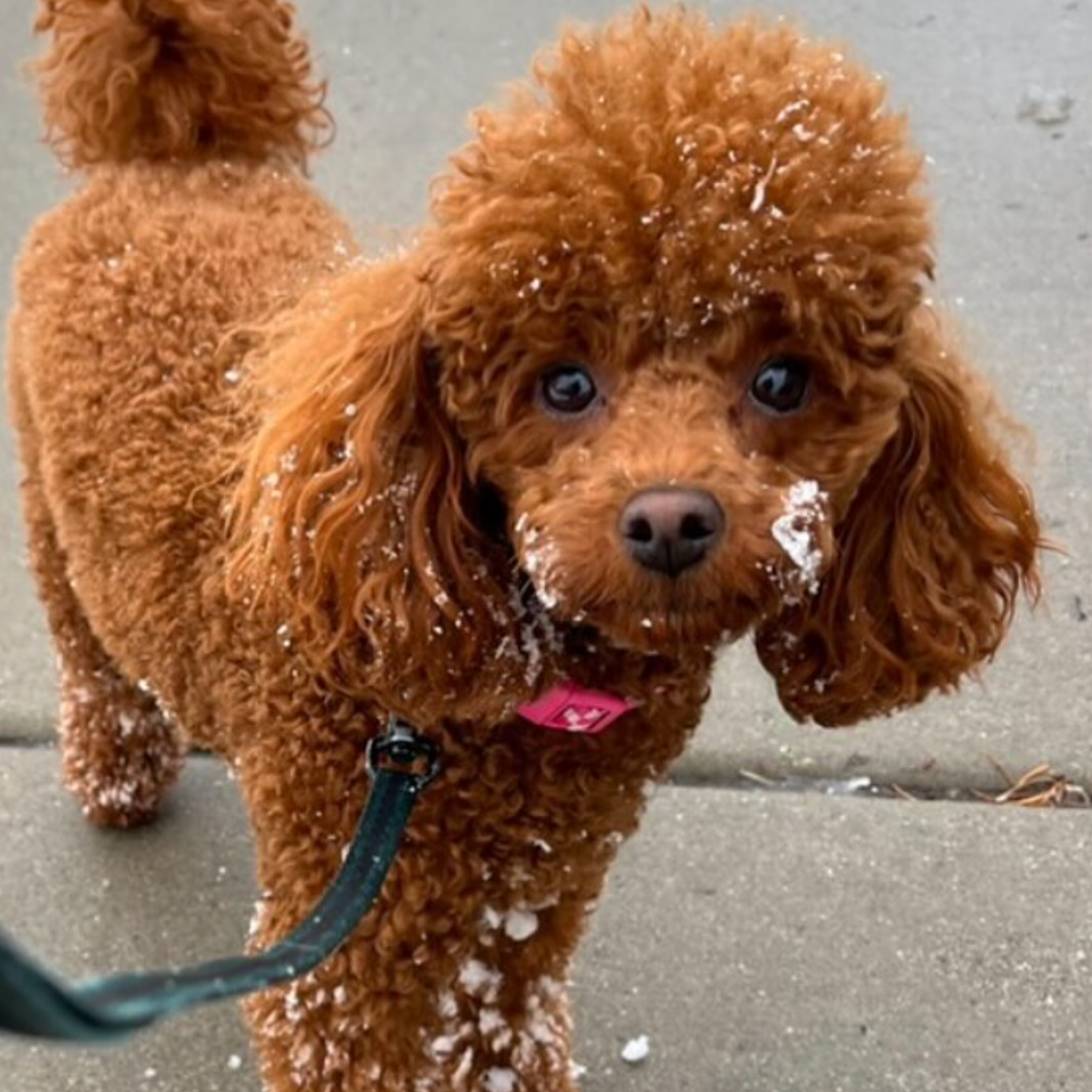
Why Mountain Valley Poodles is Known For Producing Intense Red Poodles
💡 Key Breeding Insight
Producing a truly intense red poodle requires both parents to carry strong Rufus modifiers, the e/e genotype, and ideally be clear of progressive greying. This is why reputable breeders invest in comprehensive DNA color panels before pairing — and why intense reds command premium pricing.
Visual Guide , The Red Poodle Color Spectrum
From pale apricot to deep mahogany — where intense red falls on the scale.
Light Apricot
Warm cream with subtle peach undertones. The lightest end of the red spectrum, often mistaken for cream.
Apricot / Light Red
A warm, golden-orange tone. Common and beautiful, but distinctly lighter than true red.
Medium Red
Rich copper-red with warm undertones. A desirable color that bridges the gap between apricot and intense red.
🔥 Intense / Dark Red
Deep mahogany-red with extraordinary saturation. The rarest and most coveted shade — a true showstopper.
TEMPERAMENT and Personality
Are intense red poodles different in personality? Here’s what owners and breeders report.
🧠 Exceptionally Intelligent
Poodles rank #2 in canine intelligence. Red poodles are no exception — they excel at obedience, agility, and problem-solving with remarkable speed. Rating: 98%
⚡ High Energy & Playful
Anecdotally, many breeders note that red poodles — especially intense reds — tend to have a spirited, slightly more energetic temperament than other color variations. Rating: 88%
❤️ Deeply Affectionate
Red poodles form incredibly strong bonds with their families. They thrive on human companionship and can be sensitive to their owner’s emotions. Rating: 95%
🎯 Eager to Please
Their intelligence combined with a desire to bond makes intense red poodles highly trainable — from basic commands to advanced tricks and therapy work. Rating: 92%
Puppy Guide
Choosing an Intense Red Poodle Puppy
The fading gene exists in ALL Poodles with the exception of true genetic blacks. However, the extent of fading is influenced by the interaction of various genetic modifiers, some of which may be identified (such as the Intensity (I) gene), while others remain unknown. As a result, claims that a breeding line is “non-fading” are generally inaccurate. Although strategic color breeding etiquette may help minimize the expression of the fading gene within certain lines, the potential for coat fading remains genetically inherent in almost all Poodles. We carefully select our poodle parents to give you the longest possible time we can with that beautiful Deep red we all love!
See Puppies
Please look at our currently available puppies. That will give you an idea of what we have available now and coming up.
Puppy Application
Please fill out a puppy application so we can get your contact information on file and be ready for a call.
Let’s Chat
We would love to talk about what is most important to you to have in your puppy and your timeline.
GROOMING
Care & Maintenance – Grooming Your Intense Red Poodle
Preserving that show-stopping color requires specialized care techniques.
01 — Use Color-Safe Shampoos
Avoid brightening or whitening shampoos at all costs — they will strip red pigment. Choose sulfate-free, color-enhancing formulas specifically designed for red or auburn coats. Products with UV filters help prevent sun-related fading.
02 — Daily Brushing Routine
Red poodle coats show matting more visibly than darker colors. Use a slicker brush and metal comb daily to prevent tangles and distribute natural oils that enhance coat luster and color vibrancy.
03 — UV Protection
Extended sun exposure is the #1 enemy of intense red coats. Limit prolonged outdoor time during peak UV hours and consider a leave-in conditioner with UV protection for outdoor dogs.
04 — Professional Grooming Schedule
Schedule professional grooming every 4–6 weeks. Communicate your color-preservation goals — many groomers offer conditioning treatments that seal the cuticle and lock in red pigment intensity.
05 — Nutrition for Color
A diet rich in omega-3 fatty acids, zinc, and biotin supports coat health and color retention. Some breeders recommend supplements specifically formulated for red-coated dogs.
06 — Water Quality Matters
Chlorinated or hard water can gradually dull red coats. Use a filtered water attachment on your grooming hose, and rinse thoroughly after swimming.
Why Do Red Poodle Coats Fade? What to Expect by Age
Coat fading is one of the most common questions we hear about intense red poodles, and the honest answer is that some fading is normal and to be expected in almost every red Poodle, including ours. As explained above, the fading gene is present in nearly all Poodles regardless of color, and its expression is influenced by a combination of genetic modifiers — some identified, like the Intensity (I) locus, and some not yet fully understood by canine genetics research. In practice, this means an intense red puppy’s coat will typically be at its richest and darkest in puppyhood, and many red Poodles gradually lighten to some degree as they mature into adulthood. The rate and amount of fading varies from dog to dog, even within the same litter, which is why no reputable breeder can promise a “non-fading” line. What breeders can do — and what we do — is select breeding pairs with strong Rufus modifiers and test against the progressive greying gene, which meaningfully extends how long that deep mahogany color holds before any natural fading begins. We are always happy to talk through what to expect with a specific puppy or litter.
How Our Program Selects for Color
Producing true intense red puppies, litter after litter, does not happen by chance. Before pairing any two poodles in our program, we look at the genetics behind the color we are trying to produce — confirming the e/e genotype at the Extension locus that allows red pigment to express at all, evaluating Rufus modifier strength, and screening for the progressive greying gene that causes many poodles’ coats to lighten with age. Both parents need to contribute strong color genetics for their puppies to have the best chance at that rich, saturated mahogany-red we are known for. Temperament and health always come first in every pairing decision, and color selection happens within that framework — never at the expense of a healthy, well-tempered puppy.